2 Best Adjustable Benches for Commercial Gym, Compared
As an Amazon Associate we earn from qualifying purchases. Links on this page are affiliate links.
Finding the best adjustable benches for commercial gym settings requires looking strictly at published specifications. We compared 2 options to help you select equipment that meets your facility's demands. Our top pick is the Body-Solid Pro Clubline 1000 lb Bench, which leads due to its eleven-gauge steel frame and 1000 lb capacity. These picks are based entirely on the specs listed on each product page. This guide helps you decide which bench offers the right balance of weight limits, dimensions, and durability for your specific training environment.
Quick picks
| # | Product | Best for | Price |
|---|---|---|---|
| 1 | Body-Solid Pro Clubline 1000 lb Bench Best overall | heavy commercial lifting and durability | Check price of Body-Solid Pro Clubline 1000 lb Bench on Amazon |
| 2 | Body-Solid Pro Clubline 1000 lb FID Bench Best budget | Heavy commercial lifting and durability | Check price of Body-Solid Pro Clubline 1000 lb FID Bench on Amazon |
The best fit for you
- You need the highest weight capacity for heavy lifting Body-Solid Pro Clubline 1000 lb Bench It features a 1000 lb capacity and an eleven-gauge steel frame for maximum durability.
- You prefer a silver finish for your commercial gym Body-Solid Pro Clubline 1000 lb FID Bench This model comes in silver and offers a 1000 lb weight limit with durable construction.
- You want the lightest bench to move around Body-Solid Pro Clubline 1000 lb Bench It weighs 74 pounds, making it slightly lighter than the silver alternative.
Our 2 picks
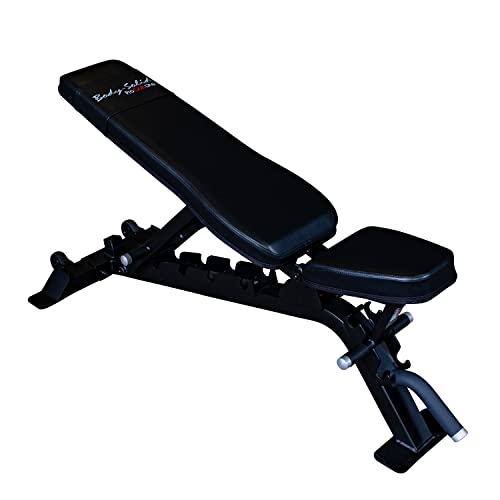
Body-Solid Pro Clubline 1000 lb Bench
Best for: heavy commercial lifting and durability
- Use
- Commercial Gym (what this guide is about)
- Weight Capacity
- 1000 lb
- Bench Type
- FID
- Attachments
- Weight Bench
- Dimensions
- 57.5 × 25 × 18 inches
- Weight
- 74 pounds
View on Amazon: Body-Solid Pro Clubline 1000 lb Bench Affiliate link
This Body-Solid Pro Clubline bench is a commercial-grade FID (flat, incline, decline) unit built for heavy use. It features a 1000 lb weight capacity and a 25-inch wide seat. The frame uses eleven-gauge steel with thick padding. It adjusts from decline to flat with separate seat and back pad controls. Transport wheels aid mobility. It suits commercial gyms and serious home users needing high stability.
Pros
- 1000 lb weight capacity for heavy loads
- Eleven-gauge steel frame construction
- Separate seat and back pad adjustments
- Built-in transport wheels for mobility
- 25-inch wide padded seat
Cons
- 75 lb weight adds bulk for frequent moves
- No remote or digital display for settings
- Limited to mechanical incline positions
Good fit if
- You need a 1000 lb rated bench for commercial use
- You require separate seat and back adjustments
- You want a heavy, stable frame for heavy lifting
Skip if
- You need a lightweight bench for small spaces
- You require digital tracking or app connectivity
- You prefer a bench under 50 lbs for easy storage
Verdict: Body-Solid Pro Clubline 1000 lb FID Bench delivers commercial durability with a 1000 lb capacity and eleven-gauge steel frame, making it ideal for gyms needing heavy-duty, adjustable seating.

Body-Solid Pro Clubline 1000 lb FID Bench
Best for: Heavy commercial lifting and durability
- Use
- Commercial Gym (what this guide is about)
- Weight Capacity
- 1000 lb
- Bench Type
- FID
- Attachments
- Weight Bench
- Dimensions
- 58 × 25 × 18 inches
- Weight
- 75.4 pounds
View on Amazon: Body-Solid Pro Clubline 1000 lb FID Bench Affiliate link
This Body-Solid Pro Clubline is a commercial-grade FID bench built for heavy lifting. It supports up to 1000 pounds using a 2x3 inch, 11-gauge steel frame. The design allows separate adjustments for the seat and back pad, covering decline, flat, and multiple incline positions. It measures 58 by 25 by 18 inches and weighs 75.4 pounds. Transport wheels help you move it around your gym.
Pros
- 1000 lb weight capacity for heavy loads
- Separate seat and back pad adjustments
- Commercial 2x3 inch 11-gauge steel frame
- Built-in transport wheels for mobility
Cons
- 75.4 lb weight adds bulk for storage
- Fixed 25 inch seat width limits narrow users
- No mention of incline click-stop precision
Good fit if
- You need a bench rated for 1000 lb loads
- You want separate seat and back angle adjustments
- You require a commercial-grade steel frame
Skip if
- You need a bench under 50 pounds
- You require a narrow seat width
- You want a compact footprint under 50 inches
Verdict: Body-Solid Pro Clubline 1000 lb FID Bench fits commercial gyms needing high capacity and durable steel construction. It suits lifters who prioritize weight limits over compact storage.
Specifications side by side
| Spec | Body-Solid Pro Clubline 1000 lb Bench | Body-Solid Pro Clubline 1000 lb FID Bench |
|---|---|---|
| Weight Capacity | 1000 lb | 1000 lb |
| Bench Type | FID | FID |
| Attachments | Weight Bench | Weight Bench |
| Use | Commercial Gym | Commercial Gym |
| Dimensions | 57.5 × 25 × 18 inches | 58 × 25 × 18 inches |
| Weight | 74 pounds | 75.4 pounds |
| Size | 58x25x18 inches | 58"x25"x18" |
| Color | Black | Silver |
| Model | SFID325B | SFID325 |
How to Choose the Right Commercial Bench
-
Check Frame Thickness
Look for eleven-gauge steel in the frame construction. Thicker steel resists bending under heavy loads. The Body-Solid Pro Clubline 1000 lb Bench uses this gauge for durability. Thinner steel may warp over time in busy gyms. Verify the gauge number in the specs. Higher gauge numbers mean thinner metal. You want the lowest number for strength. This spec ensures the bench lasts through daily commercial use without structural failure or excessive flex during heavy lifts.
-
Verify Weight Limit
Ensure the bench supports your heaviest users. Both top picks offer a 1000 lb capacity. This limit accommodates most commercial lifting scenarios. You must check this spec before buying. A lower limit risks damage with heavy plates. Commercial gyms see varied user weights. A high capacity prevents premature wear. It also provides safety for heavier athletes. Always compare the stated limit against your facility's needs. Do not guess the strength of the frame.
-
Assess Footprint Size
Measure the available floor space carefully. The top bench measures 58 by 25 inches. You need room for safe movement. Check the length and width specs. A larger footprint offers more stability. It also requires more floor space. Measure your gym layout before ordering. Ensure you have clearance for access. The second option is slightly longer. Compare dimensions to fit your specific room constraints efficiently.
-
Consider Unit Weight
Heavier benches resist shifting during use. The top pick weighs 74 pounds. The second option weighs 75.4 pounds. You prefer stability over portability in a gym. A heavier unit stays in place better. It does not slide when loaded. Check the weight spec in the data. Lighter benches may require anchoring. Heavier units provide a solid base. This spec indicates the overall build mass and stability.
-
Review Upright Dimensions
Check the height and width of uprights. The benches stand 18 inches high. The width is 25 inches. These dimensions affect pad placement. You need adequate space for your body. The uprights support the backrest mechanism. Verify these measurements for comfort. Larger dimensions may suit bigger athletes. Smaller frames might feel cramped. Ensure the specs match your user base. Proper dimensions improve exercise form and safety.
Frequently asked questions
Which adjustable bench is best for heavy commercial lifting?
The Body-Solid Pro Clubline 1000 lb Bench is the top choice for heavy lifting. It features a 1000 lb weight capacity and an eleven-gauge steel frame. This construction ensures durability in high-traffic gym environments. The bench measures 58 by 25 by 18 inches. Its black finish complements most commercial gym aesthetics. It weighs 74 pounds for stability.
What is the difference between the top two benches?
The main difference is the color and exact dimensions. The top pick is black and measures 57.5 inches in length. The second option is silver and measures 58 inches in length. Both share a 1000 lb weight capacity and 25-inch width. The second model weighs slightly more at 75.4 pounds. Both use durable steel frames for commercial use.
How wide are these commercial gym benches?
Both top-rated benches offer a 25-inch width. This standard width provides ample space for most users. It accommodates various body types and exercise positions. The consistent width ensures uniformity if you purchase multiple units. A 25-inch surface is sufficient for chest presses and seated rows. It balances stability with space efficiency in busy gyms.
Are these benches suitable for FID exercises?
Yes, the second model is explicitly labeled as an FID bench. FID stands for flat, incline, and decline. This indicates it adjusts to multiple angles. The first model is also an adjustable bench suitable for similar uses. Both designs support varied resistance training routines. You can perform flat presses, incline movements, and decline exercises safely.
What steel gauge do these benches use?
The top pick uses an eleven-gauge steel frame. This thickness resists bending under heavy loads. It is critical for commercial durability. The second model shares the same 1000 lb capacity, implying robust construction. Thicker steel extends the lifespan of equipment in busy facilities. You should prioritize this gauge for long-term reliability in your gym.
How much space do these benches require?
The top bench requires a footprint of 58 by 25 inches. The second model is similar, measuring 58 by 25 inches. Both have a height of 18 inches. These dimensions fit standard commercial gym layouts. You can plan floor space based on these measurements. The length varies slightly, but the difference is minimal. Ensure you have clearance for user movement around the bench.
Do these benches come in different colors?
Yes, the models differ in color options. The top pick is available in black. The second option comes in silver. Both colors are professional and suitable for commercial settings. The choice may depend on your gym's existing decor. Color does not affect the structural performance or weight capacity. Select the finish that best matches your facility's aesthetic.
What is the weight of these benches?
The top bench weighs 74 pounds. The second model weighs 75.4 pounds. This weight range indicates solid construction without being excessively heavy. It allows for stability during intense lifts. The weight also facilitates relocation if needed. Both are substantial enough to remain stationary during use. This mass contributes to the overall durability expected in commercial environments.